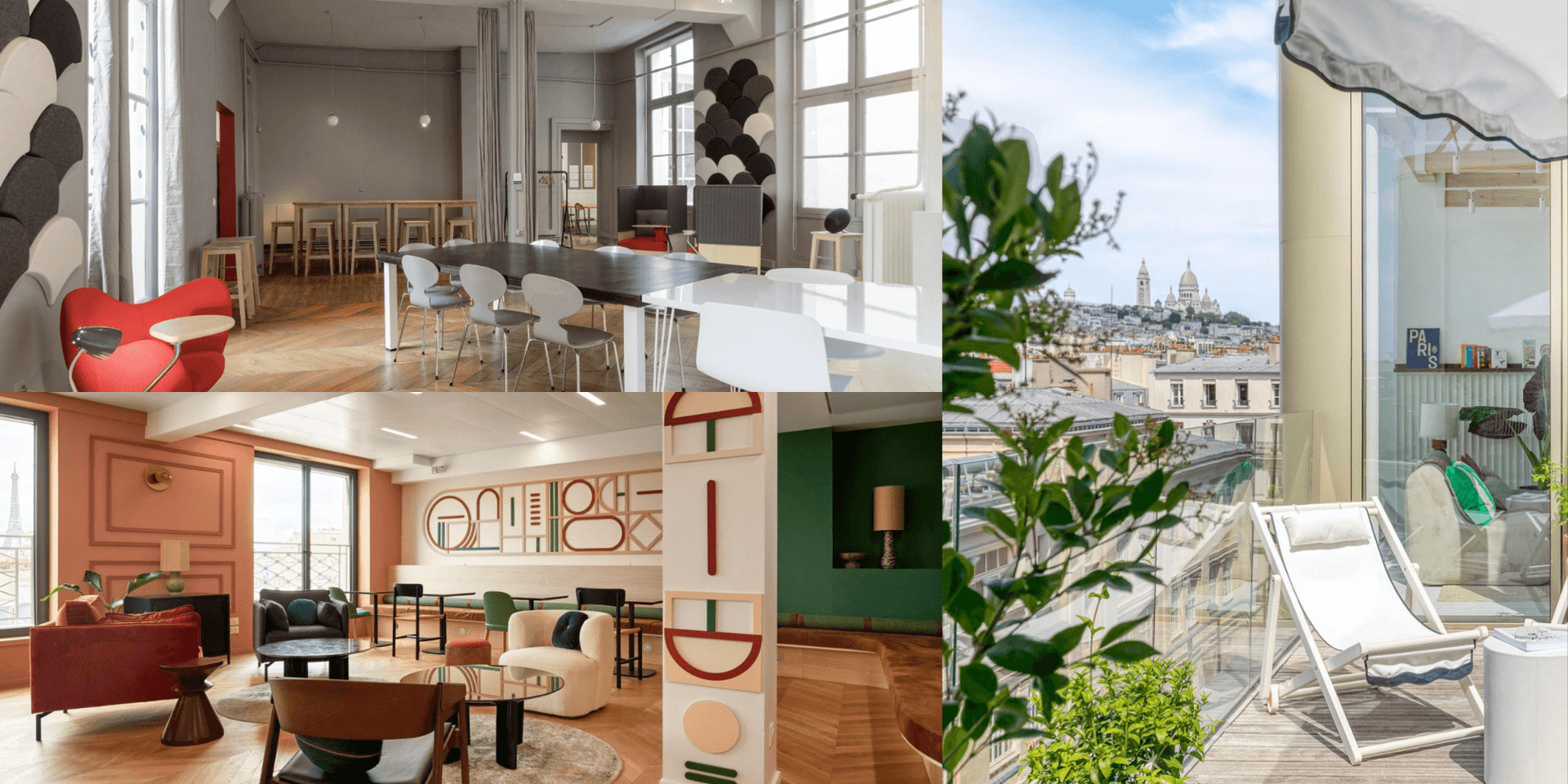
How to Choose a Meeting Room in Paris
Where to start
Paris has more meeting venues than any other French city, which is exactly what makes choosing one hard. Two meeting rooms listing the same capacity can produce two completely different meetings. Before you start comparing photos, it helps to know what you are actually looking for.
→ Browse all our meeting rooms in Paris
The format of the meeting decides everything else
The first question is not how many people, it is what needs to happen in the room. The answer changes the layout, the floor area you need and the kind of venue that will work.
Leadership meetings and small groups
One table, everyone visible, no stage. A boardroom setup works up to about fifteen people. Beyond that, whoever sits at the ends checks out. Look for a closed room with no through traffic, a real door and decent sound insulation. A glass-walled room facing an open plan floor is not the place for a confidential business meeting.
Training days and workshops
Here people move around. You need room to circulate between tables, a whiteboard or a writable wall, and ideally a flexible space your team can rearrange during the day. Allow more square metres per person than for a seated meeting. A room rated for twenty in theatre style comfortably holds twelve working in clusters.
Client presentations
The venue is part of the message. Natural light, an entrance people can find, someone at reception who knows your guests are coming. This is where distinctive venues usually beat a standard business centre room, as long as the technical side keeps up.
A concrete example: this 80 m² modular venue in Le Marais works as a single table for fifteen people and as a workshop rearranged mid-day. Parquet floors, high ceilings, a projector and flip chart on site, and a kitchen area for breaks. Hôtel de Ville metro is three minutes away on foot.
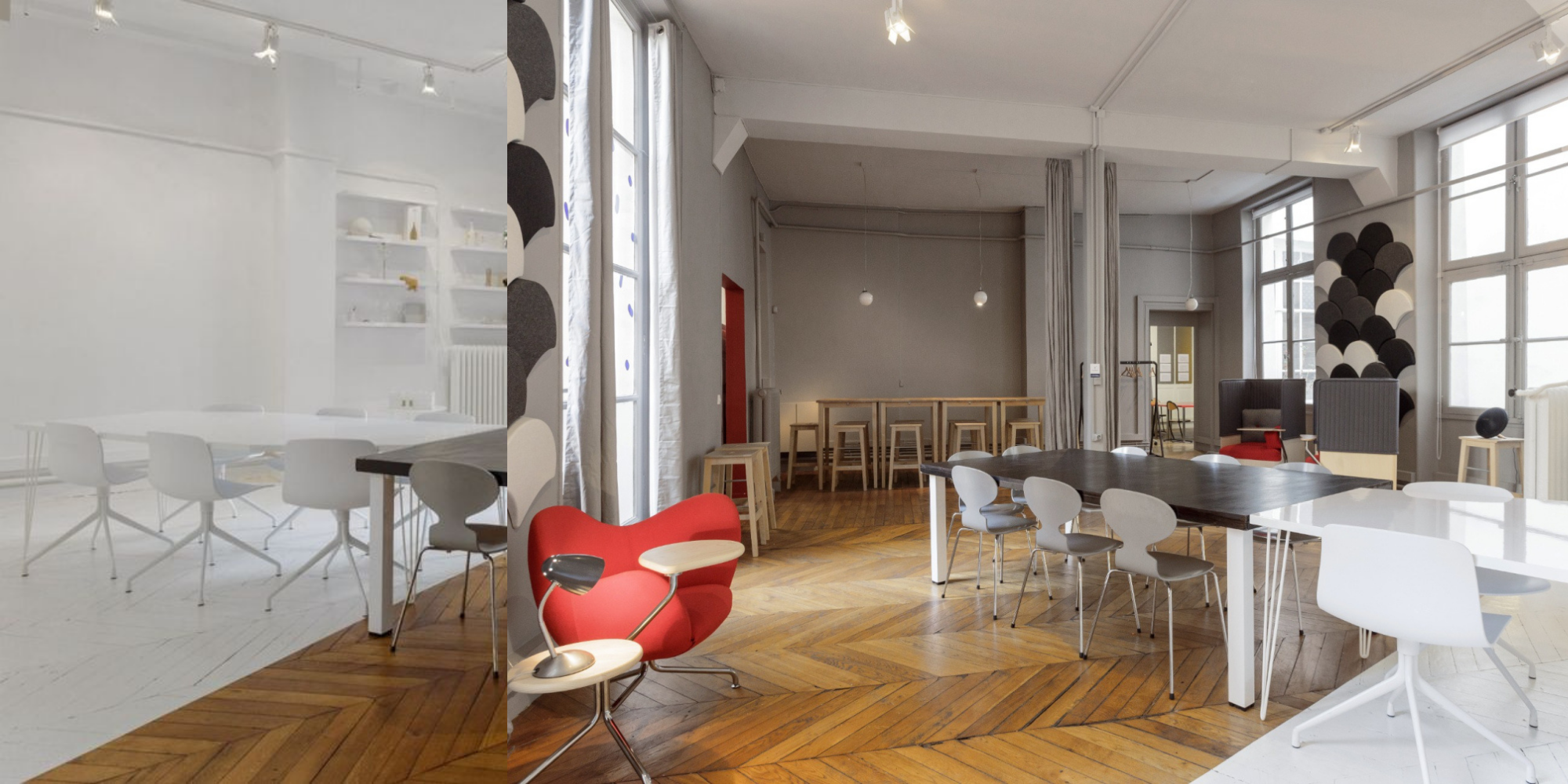
80 m² modular venue in Le Marais, Paris, set up for meetings and training
For hybrid meetings, listen before you look
Most bad hybrid meetings fail on sound, not picture. Remote participants disengage when they cannot hear properly, not when the camera is average. It is the criterion most often forgotten at booking stage.
What to ask about sound
Ask the venue three things: are there microphones in the room or only the one in your laptop, how does the acoustics behave when the room is full, and does the room face a busy street or a courtyard. A beautiful room with high ceilings and hard surfaces is often the worst one for video conferencing.
Connection compatibility
Ask what type of connection is available, and test it beforehand if the stakes are high. Plenty of installed systems work smoothly with a PC setup and cause trouble with a Mac, or the other way round. Check the wifi too: the advertised speed matters less than how many people will be connected at once.
This bright 100 m² venue in the 8th arrondissement ticks the technical boxes: projector, screen and fibre to hold a video call when the whole room is online. The 75 m² terrace gives people somewhere to breathe between sessions, with a view of the Eiffel Tower.
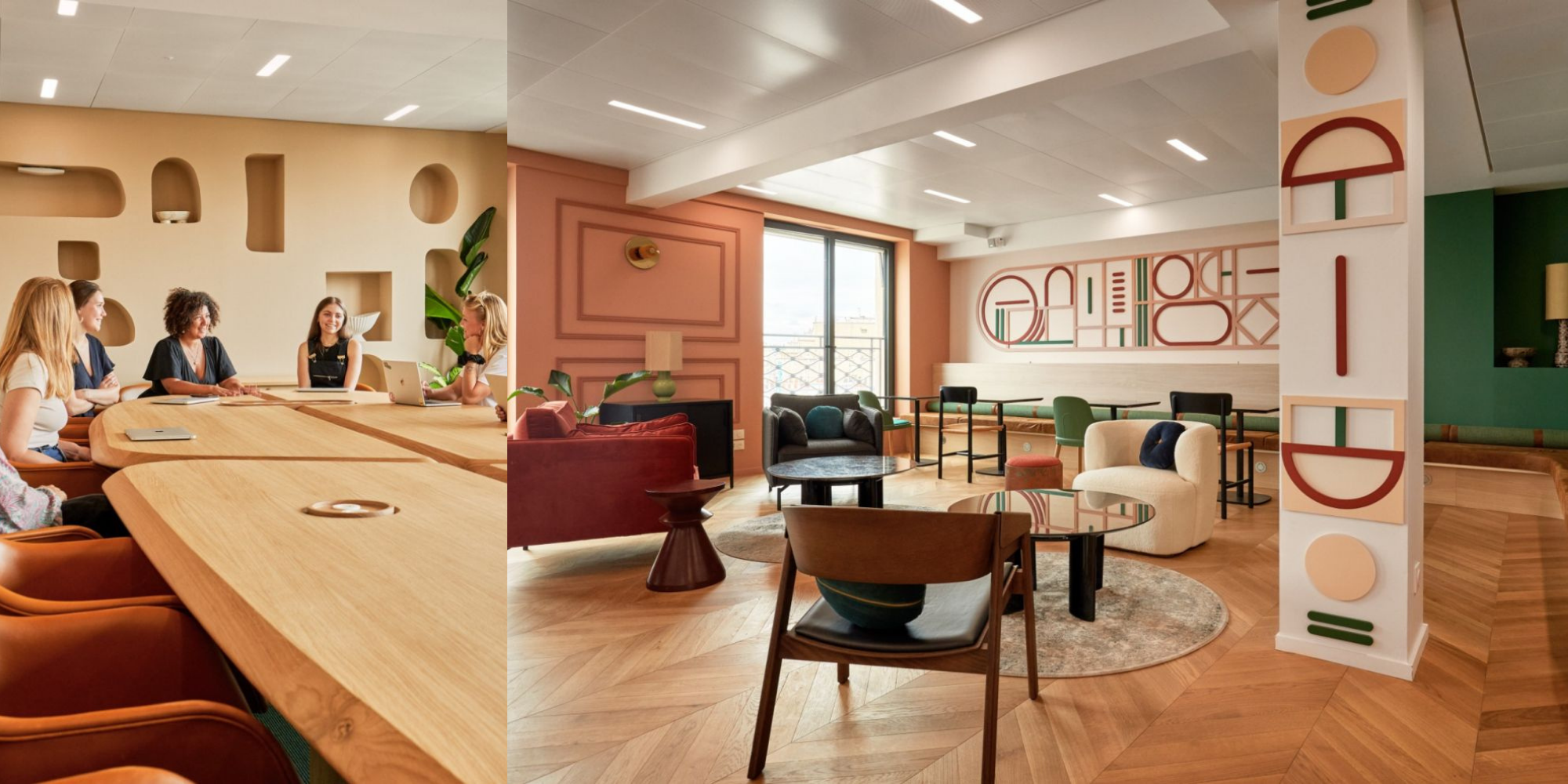
Bright Paris venue with terrace and Eiffel Tower view
Pick the district around whoever is travelling
The right district is not the most prestigious one, it is the one that costs your participants the fewest journeys.
Your participants are coming from outside Paris
Stay near the stations. Gare de Lyon, Gare du Nord, Saint-Lazare and Montparnasse let someone step off a train and be in the room twenty minutes later. For arrivals by plane, the RER B corridor is the easiest to explain. Always give two routes in your invitation, and build in a margin for anyone visiting Paris for the first time.
Your participants are already in Paris
The field opens up considerably. Somewhere central around Châtelet or Opéra suits teams spread across the city. La Défense makes sense if most of your people already work there, much less so if the whole point is to get them out of their usual surroundings. Always check step-free access and whether there is a lift, especially in Haussmann buildings.
If your participants arrive via Saint-Lazare, this 230 m² venue on the top floor of an 8th arrondissement building sits minutes from the business district. Fully glazed, looking out over the rooftops, with a terrace facing the Sacré-Cœur. Professional sound system and screen on site, air conditioning, and a choice between in-house catering and an external caterer.
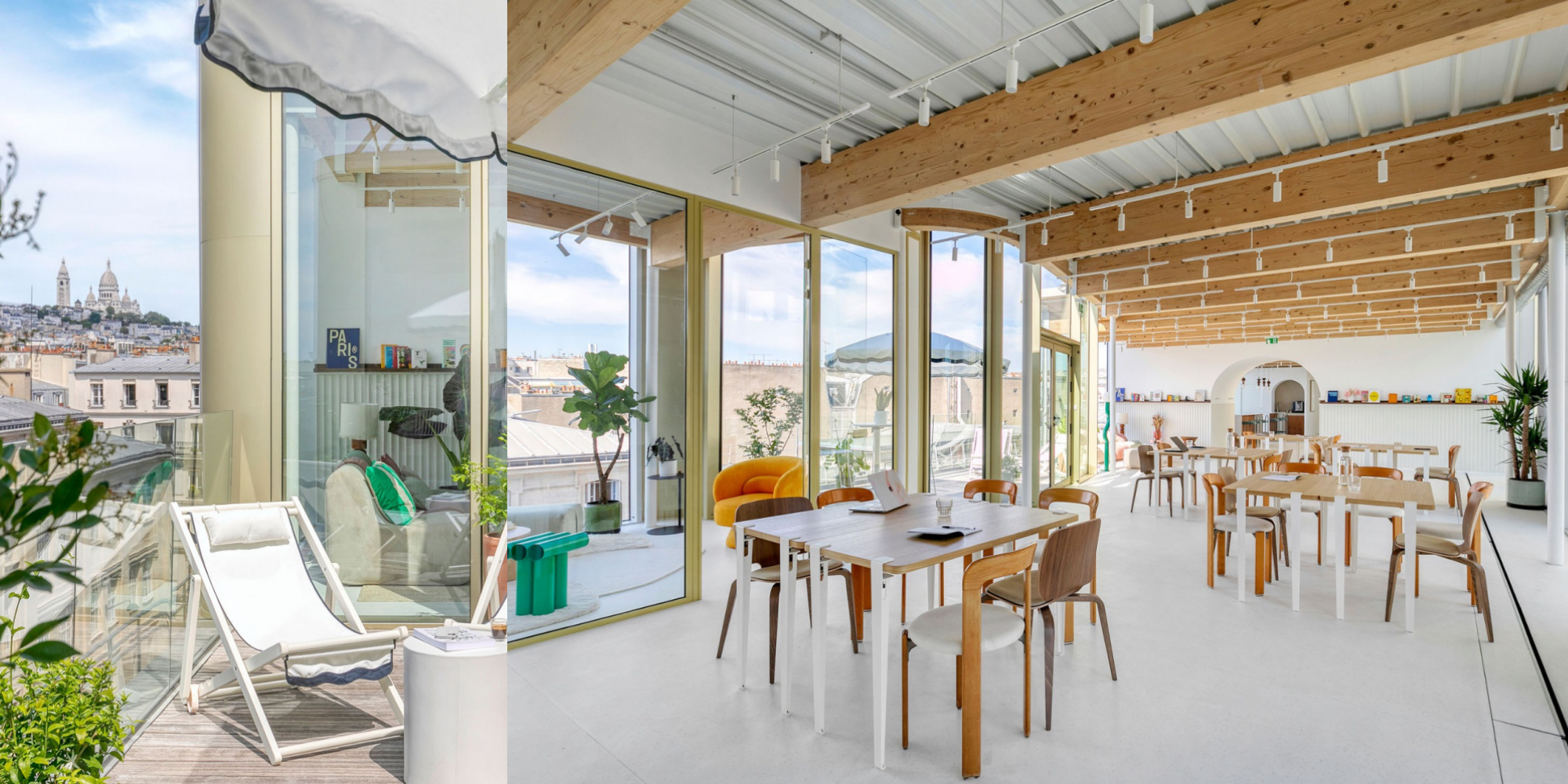
230 m² fully glazed Paris venue with rooftop and Sacré-Cœur views
What needs to stay flexible until the end
Headcounts move late. That is now the norm, and it should weigh on which venue you pick.
Numbers
Ask how late you can adjust participant numbers, and what happens if you go from eighteen to twenty-five people two weeks out. Some venues simply move you to the room next door. Others cannot. That answer is often worth more than ten photos.
Catering and layout
Check whether the venue imposes its own caterer or accepts an external one, and by what time the coffee break has to be ordered. Ask as well whether the U-shape or theatre setup can be changed during the day, and by whom. A room advertised as modular is not always modular without technical help.
Questions to ask before you book
Five points that separate a smooth meeting room hire from a day spent patching details: what is included in the hire and what gets invoiced on top, what time you can get in to set up, who will be on site during the day, the cancellation policy, and how fast the venue replies. That last one tells you a lot. A venue that is slow to answer before booking will be slow during planning too.
🎯 Find your room in Paris
Our team knows these venues, their technical limits and how flexible they genuinely are. Tell us about your meeting and we will come back with the ones that fit.