Find a venue in Barcelona for your Pop-Up
Location
Type of event
Type of venue
Date
Guests
Accommodation
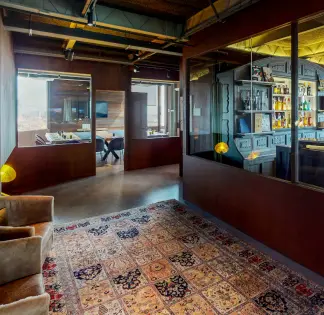
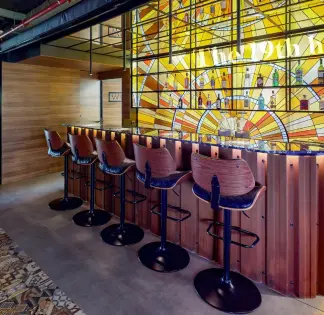
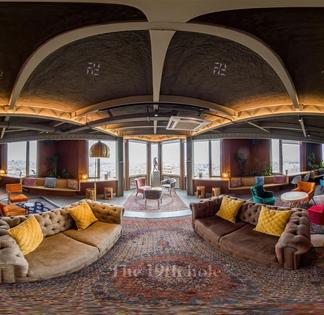
Barcelona has short-term retail space in every register: street-level units on the main shopping axes, concept stores that share their floor with guest brands, galleries and showrooms in the Eixample, industrial lofts in Poblenou, and stalls inside the covered markets. Spaces are available by the day, the week or the season. Browse by location, frontage and budget, and deal directly with the host.
.webp?w=324&h=315&crop=smart-entropy&q=75)
%20(6).webp?w=324&h=315&crop=smart-entropy&q=75)
.webp?w=324&h=315&crop=smart-entropy&q=75)
1 / 8
Popular spaces for your pop-up in Barcelona
Street-level retail units
A shop with its own door and window, which is the format most people mean by a pop-up. The advantages are obvious: passing trade, a window to dress, and a space that already looks like a shop. Availability on the prime axes is the constraint, not the concept.
Concept stores and shops that host guest brands
An established retailer gives you a corner, a rail or a table inside their space. Cheaper and faster than a whole unit, and you inherit their customers, their staff and their opening hours. The trade-off is that you are a guest in someone else's brand environment, so agree in advance how your product is displayed and who sells it.
Galleries and showrooms
Common in the Eixample and El Born, and well suited to a pop-up that is closer to an exhibition than a shop: a launch, a capsule collection, a design piece. White walls, good light, and usually no shop fittings at all, so budget for the fit-out.
Industrial lofts in Poblenou
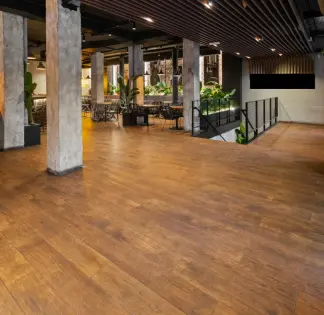
Volume, a blank canvas and room for a build. The natural choice for a brand activation where the space is the campaign rather than a place to transact. Footfall is close to zero here, so the audience has to be brought in rather than found.
Stalls in the covered markets
Barcelona's market halls are working retail with daily footfall and a fixed rhythm. Good for food, drink and craft products, less suitable for anything needing quiet or a controlled environment. Availability and terms are set by each market's management rather than a private landlord.
Rooftops and terraces for the launch night
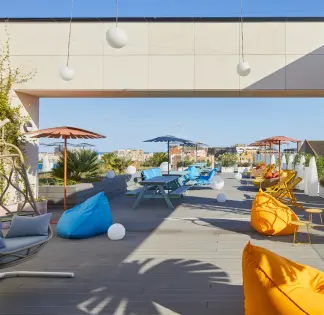
Most pop-ups open with an event, and the shop itself is rarely the right room for it. A nearby rooftop or terrace for the opening, with the unit as the destination afterwards, is a common and effective pairing.
Licences: what you can and cannot do in a temporary space
This is the part that catches out brands arriving from abroad, and it is worth resolving before you fall for a space.
Check what the premises is licensed for
In Barcelona, commercial premises operate under an activity licence or a prior communication, governed by the city's activity ordinance. The licence attaches to the premises and the use, not to you. A unit licensed as a shop can host a shop. A gallery, a studio or a warehouse may not be licensed for retail sale at all, and that does not change because the arrangement is temporary.
Ask the host directly what the space is licensed for and whether selling is permitted. If you plan to serve food or alcohol, even at an opening, ask again specifically, because that is a different category and one where enforcement is real.
Where a use is genuinely temporary, the city also has a route for provisional uses and works. It takes time, so it is a plan-ahead option rather than a fix three weeks out.
Selling as a foreign brand
Selling goods in Spain means invoicing with Spanish VAT, which requires a tax registration or a local entity. Many foreign brands run their first Barcelona pop-up in showroom or activation format, taking orders rather than payments, or partner with a local distributor or retailer who handles the transactions. Decide which model you are using before signing for a space, because it changes what you need the premises to be licensed for.
Sunday and public holiday opening
Catalonia restricts Sunday and public holiday trading for most shops to a limited number of authorised dates each year, but Barcelona has a designated tourist area, covering much of the old town and part of the centre, where shops may open without that restriction. Whether your pop-up can trade on a Sunday can therefore depend on which street it is on. For a two-week pop-up that includes two weekends, this materially changes the revenue, so confirm it with the host before you commit.
Signage, window vinyl and the façade
Anything applied to the façade or the window may need the landlord's consent and, depending on what it is, may fall under the city's urban landscape rules. Building your identity around a full window wrap and discovering it is not permitted is a common and avoidable problem. Ask early, and have a version of the concept that works with freestanding elements inside the glass.
Choosing the right neighbourhood
For a pop-up, the neighbourhood is the audience. Choose it before you choose the space.
Passeig de Gràcia and Rambla de Catalunya
The luxury and premium axis, and the most expensive retail street in Spain by prime rent. Availability is extremely tight, with vacancy on Passeig de Gràcia running around three per cent, so short-term space here is rare and usually comes through brand-owned units or specialist landlords rather than an open market. Plan months ahead if this is the address you need.
Portal de l'Àngel and Ciutat Vella
The highest footfall in the city, mass-market rather than premium, and a mix of Spanish and international visitors. The right choice when the objective is volume of people rather than a specific audience. Vacancy is higher here than on Passeig de Gràcia, which makes short lets more findable.
El Born
Independent, design-led and walkable, with a customer who browses rather than rushes. Suits fashion, jewellery, homeware and anything where the product needs a moment of attention. Streets are narrow, so check delivery access before you plan the stock drop.
Gràcia
A neighbourhood audience rather than a tourist one, with strong local loyalty and independent retail. Good for brands with a community or sustainability story, and for anything testing whether Barcelona residents, rather than visitors, will buy.
El Raval
Younger, more mixed, and the natural home for streetwear, music, skate and emerging labels. Rents are lower and the audience is genuinely local. Check the specific street carefully, since the character changes block by block here more than anywhere else in the city.
Poblenou and the 22@ district
Warehouses and studios rather than shops, and no passing trade to speak of. This is where brand activations happen when the point is to build something and invite people to it, and where the space itself does the work.
What to check before booking a pop-up space
Frontage, window and visibility
Ask for the width of the frontage and photographs taken from across the street, not just from inside. A unit that reads well on the pavement will outperform a larger space set back or below street level. Check what is currently in the window and whether it can be removed.
Footfall at the hours you will actually open
Streets change through the day. A unit near an office cluster is busy at lunchtime and dead at seven; a tourist street reverses that. If you can, stand outside the space at the hours you plan to trade, on the day of the week you plan to trade, before you sign anything.
Fit-out and what you can attach to the walls
Establish what exists and what you are bringing: rails, shelving, lighting, changing rooms, a counter. Then establish what you are allowed to do to the space — drilling, painting, adhesive, anything touching the floor — and what condition it must be returned in. Get this in writing, because it is the most common source of dispute at the end of a short let.
Power, wifi and taking payments
Check the power supply if you are bringing lighting or fridges, and check the internet connection specifically, since card readers depend on it. In older buildings in Ciutat Vella, mobile coverage at street level is not always reliable, which matters more than most brands expect on opening day.
Stock, storage and deliveries
Ask where stock will live, whether there is a back room or basement, and how deliveries reach the door. In pedestrian streets, loading windows are restricted to certain hours and vehicles, so confirm the timings before scheduling a pallet.
Minimum stay, opening hours and staffing
Confirm the minimum booking period, the hours the space may open, and whether the host provides any staff or you bring your own. Ask whether setup and takedown days are inside or outside the rental period, since a pop-up needs at least a day at each end.
Types of pop-up
Retail pop-up shops
Selling directly for anything from a weekend to a season. Location and licence are the two decisions that matter; everything else is fit-out.
Brand activations and product launches
The objective is attention rather than transactions, which frees you from footfall and lets you use a loft or an unconventional space. Budget for the build and the audience, since neither arrives on its own.
Showrooms and press days
A quiet space, good light, appointments rather than walk-ins. The Eixample works well because it is central and easy for press and buyers to reach between other meetings.
Sample sales and archive sales
High volume over a short window, usually two or three days. Prioritise capacity, queue management outside, fitting space and a payment setup that will not fail under load. Check with the host how a queue on the pavement will be handled.
Food and drink pop-ups
The most heavily regulated format. Food handling and alcohol service sit under separate licensing from retail, and a space licensed as a shop is generally not licensed to serve. Start with the licence question rather than the concept.
Timing a pop-up in Barcelona
The retail calendar
Spanish retailers set their own sale dates now, but the traditional rhythm still shapes shopper behaviour, with winter sales from early January and summer sales from the start of July. The weeks immediately before Christmas and before Reis, on 6 January, are the strongest trading period of the year and the hardest to find space in.
Trade fair and festival weeks
Barcelona's calendar brings large, specific audiences into the city on known dates. Mobile World Congress in early March delivers a tech and business crowd, while music and design events across the summer bring a younger consumer. If your product matches one of those audiences, timing the pop-up to the week is more valuable than any amount of paid media.
How long to run
Two weeks is the shortest period that justifies a proper fit-out; anything under a week works better as an activation than a shop. Weekends carry most of the traffic, so count the weekends rather than the days when you compare options, and remember to check whether you are allowed to open on the Sundays you are counting.