Rent a meeting room in Barcelona
Location
Type of event
Type of venue
Guests
Accommodation
Barcelona has meeting rooms in almost every format: six-seat boardrooms in Eixample townhouses, workshop studios in converted Poblenou factories, hotel rooms beside the airport, and hourly rooms in serviced buildings across the city. Most can be booked for the hours you need rather than a full day. What separates a good room from a merely available one is usually daylight, air conditioning and whether the screen works the first time.
79 available venues
Sort by:
.webp?w=324&h=315&crop=smart-entropy&q=75)
.webp?w=324&h=315&crop=smart-entropy&q=75)
%20(6).webp?w=324&h=315&crop=smart-entropy&q=75)
1 / 7
Types of meeting room in Barcelona
Meeting rooms are not one category. The differences between them decide what kind of work is possible inside, so it is worth knowing which you are looking at before comparing prices.
Boardrooms and private meeting rooms
Enclosed rooms for six to twenty people, with a fixed table, a screen and a door that closes properly. Built for discussion rather than presentation. Ask which side of the building the room sits on, because street noise through an open window is a genuine problem in the centre, and in summer the window will be open.
Workshop and training studios
Open rooms with movable furniture, wall space for pinning work up, and enough floor to split into groups. Most are in Poblenou and the surrounding converted industrial buildings. They suit any format where people are producing something and moving around rather than sitting still.
Hotel meeting rooms
Rooms inside a hotel, with catering, staff and bedrooms in the same building. The most predictable category and the easiest to arrange remotely. Also the most likely to be windowless, so confirm daylight before booking anything longer than two hours.
Coworking and business centre rooms
Hourly rooms in a serviced building, with a staffed reception, printing and connectivity that someone else maintains. The lowest-friction option for short bookings, and generally the cheapest per hour. Style is functional rather than distinctive.
Meeting rooms with a terrace
A room with its own adjoining outdoor space. Barcelona has more of these than most European cities and they are usable from roughly March to November, which turns coffee breaks into something people actually leave the room for. Check whether the terrace is private or shared with the rest of the building.
Meeting rooms inside unusual venues
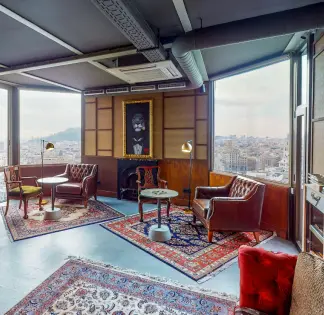
Modernist townhouses, galleries, lofts and studios that also have a proper table and screen. More expensive and less standardised than a business centre, and the right choice when the room itself is meant to make an impression, such as a client presentation or a board meeting with external guests.
Sizes and configurations
Two to six people
Small enclosed rooms, usually sold by the hour. Common in coworking buildings, and the easiest category to book at short notice. Enough for an interview, a one-to-one, or a short internal review.
Eight to twenty people
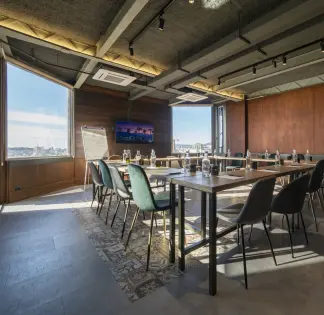
The boardroom bracket, and the most requested size in Barcelona. A single table, everyone able to hear each other, a screen at one end. Beyond about sixteen people, check the acoustics and confirm that whoever is at the far end can still see the screen.
Twenty to fifty people
Now a training room rather than a meeting room. Furniture needs to be movable, the layout matters more than the table, and you should expect to pay for a longer minimum booking. Air conditioning capacity becomes a real question at this size in summer.
Understanding the layout names
Boardroom means one table with everyone around it. U-shape opens one end so a facilitator can work in the middle. Classroom gives everyone a writing surface facing forward. Theatre is chairs only, which fits the most people and suits the least discussion. Cabaret uses small round tables for group work. A room's capacity changes substantially between these, which is why the advertised number is rarely the number you get.
What to check before booking a meeting room
Capacity in the layout you actually want
Ask for the figure in your configuration, not the maximum. A room listed for twenty may seat twelve at a boardroom table. Check whether the furniture can be moved at all, since some rooms are fixed and some venues charge for a reset.
Technology and connectivity
If anyone joins remotely, confirm the specifics rather than the word "equipped": camera, microphones, screen inputs, and the bandwidth actually available in that room. Ask whether someone on site can help if a call fails, and for anything important, arrange a test in the room beforehand.
Daylight, air and comfort
Beyond two hours, light and ventilation affect the room more than the furniture does. Ask which way the windows face and confirm air conditioning between June and September, when a west-facing room becomes unusable after about three in the afternoon.
Catering and where people eat
Check what coffee service is included, whether food can be brought in, and whether there is anywhere to eat that is not the meeting table. Where a room has no catering at all, being within walking distance of somewhere to eat becomes part of the decision.
Booking terms and what counts as your time
Meeting rooms are the one category commonly sold by the hour, so confirm the minimum booking, what happens if you overrun, and whether setup and clear-down sit inside or outside your slot. Half-day blocks often have fixed start times that will not necessarily match your agenda.
Where the meeting rooms are in Barcelona
Supply is not spread evenly across the city. Each district has a different mix, and knowing which is which saves filtering through rooms that were never going to fit.
Eixample
The largest concentration of professional meeting rooms, in everything from Modernist townhouses to modern office floors. Central, walkable from the main business hotels, and close to Passeig de Gràcia and Plaça Catalunya. The grid also means straightforward vehicle access, which matters if anything is being delivered.
Diagonal and the upper business district
Corporate in style, larger on average, and easier to reach by car, with parking the centre does not offer. This is where the office towers are, from Zona Universitària out to Diagonal Mar, and the rooms reflect that.
Poblenou and the 22@ district
Converted industrial buildings, so rooms are bigger, more flexible and less formal. The best supply of workshop studios in the city. About fifteen minutes by metro from Plaça Catalunya.
Sants and Plaça Espanya
Rooms next to the main railway station, useful when people are arriving on the high-speed line. Supply here is dominated by hotels and business centres rather than independent venues.
Montjuïc and the Fira side
Meeting space around the exhibition centre, much of it institutional or hotel-based. Note that Fira operates two separate sites: Gran Via in L'Hospitalet, towards the airport and served by metro L9 Sud, and Montjuïc near Plaça Espanya. They are not close together, so check which one your event uses before booking anything nearby. Availability collapses during trade fairs and prices move with it.
Near the airport
Hotel meeting rooms built for one purpose: people flying in and out on the same day. Functional rather than characterful, and the correct choice when nobody is staying the night.