Find a venue in Barcelona for your Meeting
Location
Type of event
Type of venue
Guests
Accommodation
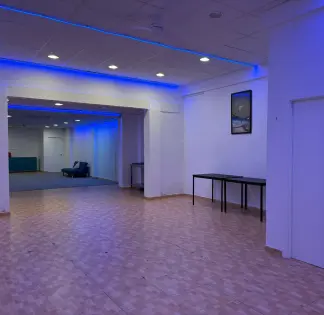
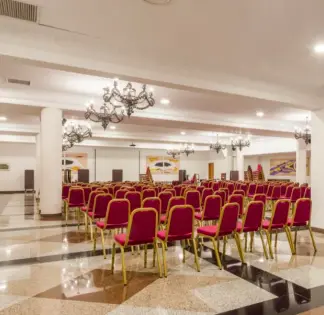
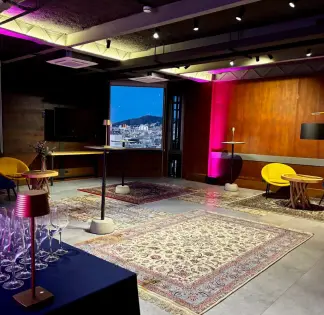
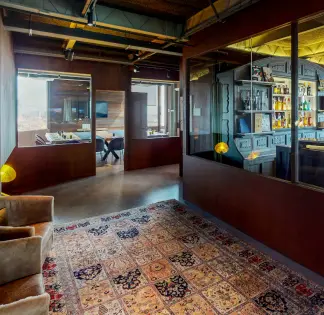
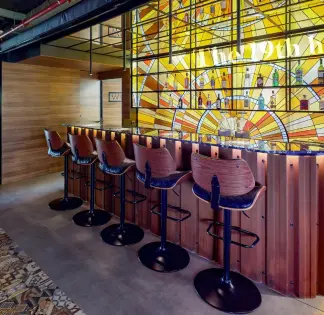
Barcelona covers the whole range: a six-seat boardroom in a Modernist townhouse, a converted factory in Poblenou with space for a full-day workshop, a room with a terrace you can genuinely use from March to November, a private dining room for a working lunch, or a serviced room by the hour beside the AVE platforms at Sants. Whatever the format, and wherever your participants are travelling from, something here fits.
%20(6).webp?w=324&h=315&crop=smart-entropy&q=75)
1 / 12
Popular spaces for your meeting in Barcelona
A meeting does not have to happen in a meeting room, and the format of the day should decide the venue rather than the reverse.
Meeting rooms and boardrooms
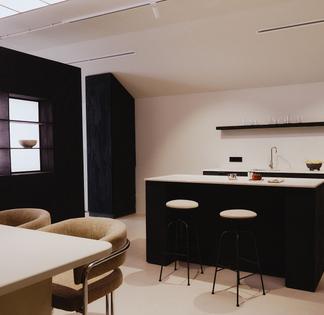
The default, and the right answer for anything confidential or discussion-led. Supply is deep across the city, from serviced rooms billed by the hour to boardrooms inside Modernist buildings. Sizes, layouts and pricing are covered on our Barcelona meeting rooms page.
Lofts and studios for working sessions
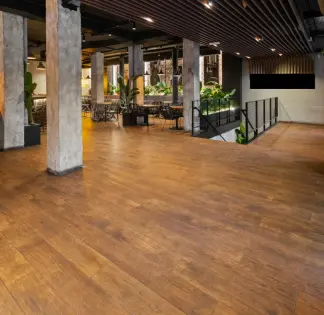
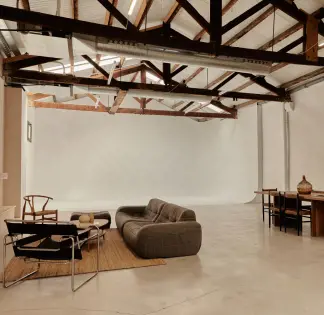
When the group is producing something rather than discussing it, an open room with movable furniture beats a fixed table. Poblenou holds most of them, in converted textile factories with the ceiling height and floor area that a full-day workshop needs.
Hotel meeting spaces
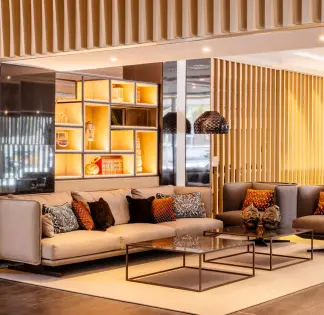
The straightforward choice when participants fly in, because room, catering and bedrooms sit in one building and the whole thing can be arranged remotely. Note that hotel meeting space is the first category to disappear during trade fairs, since exhibitors book it out across the city.
Private dining rooms for working lunches
Underused by international organisers and well suited to Barcelona, where lunch runs from around two o'clock and is treated as working time rather than a break from it. A private restaurant room gives you two uninterrupted hours with a client, and local participants will read it as normal rather than informal.
Terraces and rooftops for the informal half
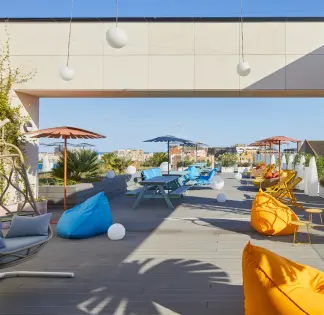
Barcelona's climate makes an outdoor break a real option for most of the year, roughly March to November. Organisers consistently rate the city's connectivity and its food and drink among the reasons they choose it, and a venue with an outdoor space is where both show up in a working day.
Why hold your meeting in Barcelona?
A city that hosts business year-round
Barcelona has been among the world's top five destinations for international congresses for twenty-five years running, and it leads the global rankings for scientific and medical events. The relevance to a twenty-person meeting is indirect but real: the AV companies, venue staff and caterers you will be hiring work to congress standards every week, because that is the market they serve the rest of the year.
Same-day travel works
Most European business centres have a direct flight, with early-morning and evening departures on the main routes. The airport sits about 15 km southwest of the centre with a direct metro line, so a meeting running from ten to four is realistic for participants who sleep at home either side, which takes accommodation out of the budget.
One practical note: Terminals 1 and 2 are around 4 km apart with no connection airside. If you are meeting arrivals, confirm the terminal rather than just the flight.
A market built around mid-size meetings
Most meetings held in Barcelona involve fewer than 250 people, so the venue market here is not built solely around convention centres. Finding a good room for twelve, or a studio for forty, is straightforward outside the trade fair season.
Where to meet, depending on how people arrive
For a meeting, location is a travel question before it is anything else.
Flying in and out the same day
Stay between the airport and the centre, or at the airport. El Prat is 15 km out and the metro L9 Sud runs to both terminals, so a venue on that side of the city saves the cross-town leg twice. When nobody is staying the night, transfer time is worth more than the setting.
Arriving by train
Sants is the terminus for the high-speed line from Madrid and for services from the south of France. A venue in that district lets a meeting start half an hour after arrival and finish in time for the return train, and the serviced-office operators around the station exist precisely for that pattern.
Already at a trade fair
Meet near the fair, not in the centre. During a major congress, asking people to travel in and back is the most common reason a meeting is cancelled rather than attended, and taxi queues at Fira at the end of an exhibition day are long.
Everyone is local
Eixample or the Diagonal corridor. Eixample holds the largest concentration of professional meeting space and is walkable from most business hotels; Diagonal, from Zona Universitària out to Diagonal Mar, is where the corporate offices are and where parking exists.
What types of meetings can you organize in Barcelona?
Board and executive meetings
Small, confidential, and rarely flexible on date. Ask specifically whether another group can be booked into the adjoining room on the same day, since that is the failure that matters and it is rarely volunteered.
Client and sales meetings
Central and short, with the client travelling as little as possible. With Spanish counterparts a working lunch often achieves more than a formal room, and it fits the local business day rather than cutting across it.
Workshops and training days
A full day in one place, with movable furniture, wall space and a break area. Barcelona's advantage is that the break can be outdoors for most of the year, which is worth building into the agenda rather than leaving to chance.
Interviews and recruitment days
A room for the panel and somewhere candidates wait without meeting each other. Hourly bookings fit this well, and a staffed reception handles the arrivals, which is the part that usually goes wrong.
Meetings around a congress
Barcelona's strength in medical, scientific and technology congresses means a large share of corporate meetings here are attached to someone else's event. Exhibitors and delegations need private space away from the show floor, these rooms are judged almost entirely on proximity, and they are booked months ahead at higher rates. If your meeting sits inside a fair week, secure the venue before anything else in the programme.
Planning a meeting in Barcelona
Check which Fira site your event is at
Fira de Barcelona operates two separate venues. Gran Via is in L'Hospitalet de Llobregat, southwest of the city towards the airport, reached by metro L9 Sud at Europa|Fira. Montjuïc is the historic site near Plaça Espanya, inside the city. They are not close to each other, and the fair programme is split between them: MWC and ISE run at Gran Via, while Barcelona Wine Week and others run at Montjuïc. Booking a meeting room "near Fira" without checking which site is a common and expensive mistake.
Plan around the trade fair calendar
The crunch is February to mid-April rather than spread through the year. From Fira's published 2027 calendar: ISE on 2–5 February, Barcelona Wine Week 8–10 February, MWC Barcelona and 4YFN together on 1–4 March with Talent Arena alongside at Montjuïc, KubeCon Europe 15–18 March, and In-cosmetics Global 6–8 April. MWC alone is expected to draw around 105,000 attendees.
During those weeks, venue availability tightens across the whole city and hotel rates rise sharply. If your dates are movable, avoid them. If they are not, book several months ahead and start outside the hotel category, which is where exhibitor demand concentrates first.
Work with the Spanish working day
Meetings here typically start between half nine and ten rather than eight, and lunch falls at around two. An agenda that breaks at half twelve will be out of step with the venue, the caterer and every local participant. Either finish before lunch or plan a proper one, and say which at the point of booking, because it changes staffing.
Book only the hours you need
Many venues quote a full day by default. If the meeting runs ten to two, ask for those hours: a four-hour slot fits into more diaries than an eight-hour one and the saving is significant. Confirm whether setup and clear-down sit inside or outside your booked time.
Decide what happens at lunch
Lunch is the longest break in the Barcelona working day and the one where the useful conversation happens. Catered in the room, taken at a restaurant nearby, or skipped entirely are three different meetings. Decide before you book, because it affects which venues are viable: a room with no catering and nothing within walking distance limits the day considerably.